An art prompt is a short instruction, a word, a constraint, or a small scenario that gives you just enough direction to start making something. It is not a finished idea. It is a seed. This article is about how I use prompts to fill sketchbooks, what types work, how to build your own, and what to do on the days when nothing else gets me to pick up a pencil.
Why I Rely On Art Prompts When I Feel Stuck
Early in 2024, I sat at my table by the window with a blank page open and spent ten minutes deciding what to draw. Then I drew nothing. The next day I drew the same coffee mug I had drawn forty times. Not because I wanted to, but because choosing felt harder than drawing. That loop ran for weeks: stare, hesitate, draw the mug or close the book.
What broke the cycle was a scrap of paper with a single word on it. The word was “lantern.” I did not especially want to draw a lantern, but the decision had been made for me. I drew it badly, wrote the date, and turned the page. The next day I pulled another word. That was the start of using art prompts, and it changed how I work.
A drawing prompt is similar. It might say “something you would find in a coat pocket” or “a pair of boots from two angles.” The point is enough specificity to begin, but enough openness that the page becomes yours. Compare that with vague advice like “just draw something,” which usually leads to staring.
The idea is old. In 1975, Brian Eno and Peter Schmidt published Oblique Strategies, a deck of cards with short directives meant to break creative deadlocks. Each card was a nudge or a limit, not a blueprint. You do not need an app for this. A torn envelope with one word on it works. On the other end of the spectrum, Inktober turned daily prompts into a shared public challenge starting in 2009, giving artists a schedule and a community. By 2022 the hashtag had appeared on roughly 24.5 million posts. That scale is impressive, but a quiet list taped to the fridge does the same job for your sketchbook.
Art prompts can help overcome creative blocks because they remove the question that kills most sessions: “What should I draw?” Art can communicate emotions and challenge perspectives, but only if you get past the blank page first. Prompts moved me from perfectionism to filling pages one at a time, which fits the Fill the Sketchbook philosophy of process over product. I learned a small mental trick that saved many pages: if the prompt was “a pair of boots” and the boots look strange, that is the prompt’s fault, not mine.
If you feel stuck right now, nothing is wrong with you. You only need a starting point.
How To Use Art Prompts In Your Sketchbook Today
Here is what you can try in the next ten minutes. No preparation, no special supplies.
My routine in simple steps:
-
Pick one prompt and commit. I take the first one that does not make me groan. Sometimes I roll a die against a numbered list. Shuffling through prompts looking for the “good” one is just procrastination wearing a creative hat.
-
Set a timer. My default is ten minutes. Five if I am tired, twenty if I am enjoying it.
-
Choose one medium. Whatever is closest. Pencil, pen, gray marker.
-
Make one page. I do two or three tiny thumbnails first to find a different take, then pick the one that surprises me most and work it up.
I write the prompt and date in the corner so I can see later what I was answering. Daily drawing prompts create a simple, repeatable habit this way, and a quick 10-minute sketch counts as practice.
Here are prompts you can use right now:
-
A pair of shoes by the door, drawn three times from different angles.
-
The view from your window, only in silhouette, five minutes.
-
Three objects from your desk arranged in a triangle, drawn in pen with no erasing.
-
Your breakfast plate from directly above, watercolor or pencil, ten minutes.
-
A single flower in a glass, only using line and shadow.
A 5-minute drawing prompt can serve as a warm-up exercise before a longer session, and art prompts can be used for quick warm-up sketches on days when you are short on time. Stop when the timer ends, even if the page is unfinished. A page that is 80 percent done still counts as a filled page. There is no need to create a new masterpiece every time you open the book.
Why Art Prompts Work When Creative Block Hits
Creative block usually comes from two directions at once. Art block often results from too many choices or pressure to perform. You have a blank page, infinite subjects, every medium on the shelf, and an internal voice asking if the result will be worth the paper. That is decision overload layered with fear.
Art prompts help break creative blocks by providing direction. A clear instruction like “draw a still life of your breakfast from above” gives the mind less room to spiral. The task shrinks into a small experiment. You are not proving your skill, you are answering a prompt. That reframe matters.
Several studies support this. Research with 56 visual artists using a constraint-based prompt tool found that 96.4% reported overcoming their block to a considerable extent. Art prompts can reduce anxiety and support emotional processing, and creative expression can lower cortisol levels and reduce anxiety. The mechanism is simple: fewer decisions, lower stakes, more pages filled.
A personal example: I went three weeks without drawing anything in autumn 2024. The prompt that broke the streak was “your breakfast bowl.” Nothing romantic, nothing clever. I drew a half-eaten bowl of porridge in ballpoint, badly, in seven minutes. That page restarted everything.
Types Of Art Prompts I Use (With Concrete Examples)
Different kinds of prompts target different parts of the creative brain. I reach for four broad kinds most often: subject prompts (a mug, a tree), theme or mood prompts (loneliness, dusk), constraint prompts (two colors only, non-dominant hand), and tiny story prompts (“a lighthouse keeper who has run out of tea”). There are fourteen categories of art prompts available if you count more granular types, from landscape to sci fi to animals to architecture, and prompts can be tailored to different skill levels, from beginner to expert.
Observational prompts focus on what you see in front of you: a still life of fruit, a mug, your shoes. These build proportion, light and shadow skills. Memory prompts are different. The architecture of memory can be explored visually, and art can explore the intersection of memory with physical structures. Try drawing your childhood bedroom from recall, or illustrate a scene from your last walk using only what made you feel calm. Memory and nostalgia can be visualized using fragmented imagery, so a collage of torn shapes suggesting a half-remembered room works well here.
Imaginative prompts create characters, stories, moods. Isolation can occur in bustling urban centers, so try drawing a figure alone in a crowded train. Surveillance culture influences human behavior and privacy, which makes a prompt like “draw a room where someone is always watching” surprisingly rich. Exploring feelings of belonging can address cultural identity, so a prompt about “the place where you first felt at home” pushes into personal territory.
Abstract and process prompts emphasize mark-making, texture, shapes and patterns over subject. Visualizing invisible emotions can give them physical forms: try painting anxiety as a color and a form without any recognizable image. Constraint examples I like include “no lifting the pen,” drawing with a limited palette of only two colors, or working with my non-dominant hand. These push me to solve problems instead of repeating my usual moves.
Prompts can be tailored to beginner, intermediate, or expert skill levels. A beginner might sketch one object in pencil. An experienced artist might combine print, collage and ink in response to the same word. Cycle through several prompt types during a month to avoid drawing the same things in the same style repeatedly.
Designing Your Own Drawing Prompts From Everyday Life
Pre-made lists are useful, but I like making my own because they come from what I actually see and care about. The formula is simple: subject + action or constraint + mood or time.
Five examples built from that formula:
-
Your keys, drawn only with continuous line, in fifteen minutes.
-
A teacup spilled, using only warm-toned watercolors, twenty minutes.
-
A streetlamp at dusk, drawn with non-dominant hand, just silhouettes.
-
Your favorite pair of shoes from three angles, only line and shadow.
-
A memory of rain, painted abstractly with drips and blue-grey tones.
My random pairing trick for when a single word feels too easy: pick one noun (“umbrella”) plus a time or mood (“late night”). The collision between the two is where the picture gets interesting. Exploring a clear theme can give artwork deeper meaning, and the contrast between macro and micro can show universal patterns, so try pairing a tiny detail (a keyhole) with a large idea (freedom) and see what comes out. Combining different identities can reflect personal variations, which is why I sometimes pair a personal object with a public space.
Keep a running list of prompt seeds in the back of your sketchbook or on your phone: phrases from songs and conversations, a random noun from a dictionary page, whatever your eyes land on in the room. Good sketchbook drawing ideas are everywhere once you start collecting fragments. Turn personal routines into recurring prompt themes: morning coffee, the commute, the evening walk. These guarantee you always have a familiar subject to revisit.
Using “One Subject” Prompts To Go Deeper Instead Of Wider
Choosing one subject for a week or a month takes the “what to draw” question completely off the table. Examples: your own hand, your living room chair, the same tree outside your window. Nature reclaims urban spaces creating a tension with human infrastructure, which means even a single tree beside a wall changes week to week.
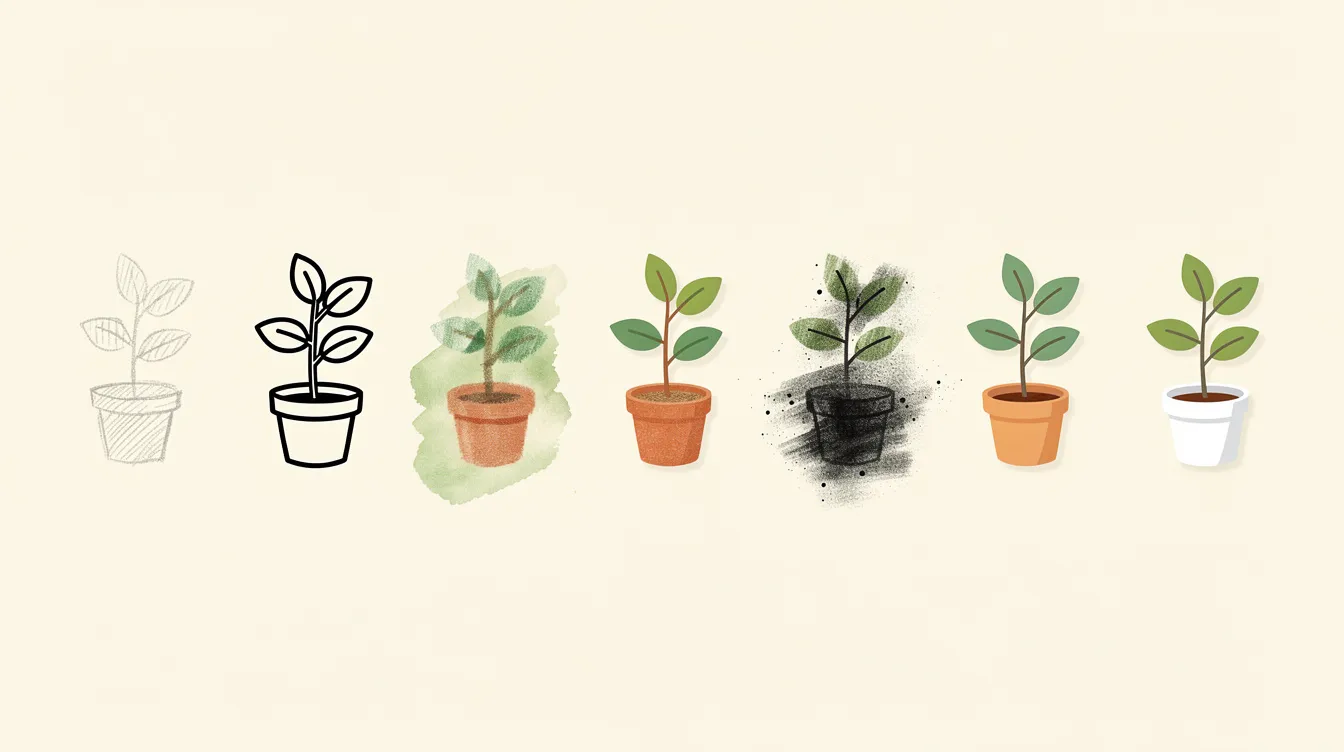
Vary the viewpoint, medium, lighting and time of day while the subject stays constant. I sometimes give seven pages to the same mug or plant, each with a different constraint: pencil, ink, watercolor, non-dominant hand, negative space, texture focus, free remix.
Redrawing a kettle in January and again in June shows how my choices have shifted. The form is the same but the line, the composition, the confidence are different. Transformation can represent personal growth and change, and consistent practice leads to faster artistic improvement. This approach helps when I am tired of inventing something new every single day.
Prompting For Still Life: Turning Ordinary Objects Into Studies
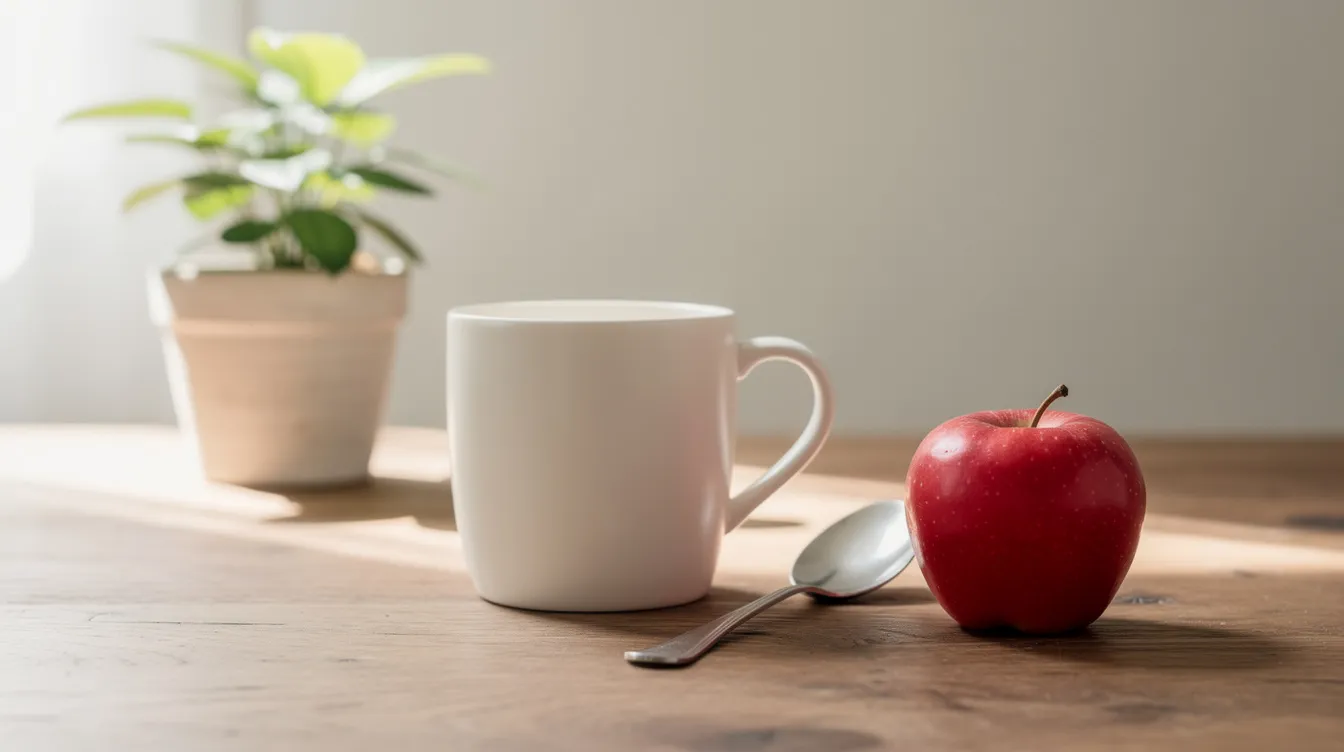
A still life is just an arrangement of inanimate objects. It is one of the most accessible forms of observational drawing because everything you need is already in the room. Fruit from the fridge, a mug and spoon, a stack of books, shoes by the door.
Here are specific still life prompts, each with an object list, viewpoint and constraint:
|
Prompt |
Viewpoint |
Constraint |
|---|---|---|
|
Three fruits from the fridge |
Top-down |
Value only, no color, 10 min |
|
Mug, spoon, notebook on desk |
Side, single light source |
Pen and wash, 20 min |
|
Stack of books and a plant by window |
Side, midday light |
Two colors plus neutrals only |
|
Shoes by doormat |
Ground level |
Pencil, shadow shapes emphasized |
|
Plate with breakfast (toast, fruit, coffee) |
Overhead |
Ink outlines, watercolor fill, stop at timer |
|
Three objects from a pocket |
Arranged on white paper |
Continuous line, no lifting pencil |
|
A single flower in a glass beside a lemon |
Eye level |
Full range of values, one medium |
Repeat the same arrangement with different goals: one page for line and contour, the next for shadow shapes, then for color. This builds observation and keeps the sketchbook grounded in real life. Even ordinary objects become studies in light, space and detail when you look long enough.
Mixed Media Art Prompts For Playful Exploration
Mixed media loosens perfectionism by making neat outcomes almost impossible. When you glue torn paper onto a page and paint over it, the result is never going to look tidy. That is the point. Using unconventional materials can enhance creative expression precisely because they force you away from safe, predictable results.
Prompt ideas for mixed media pages:
-
Glue three torn pieces from an old magazine, then redraw over them in pen and watercolor.
-
Do an underpainting with acrylic or even coffee, then overlay with colored pencil or fine pen.
-
Use found objects as stamps: bottle caps, food packaging, the end of a cardboard tube.
-
Layer paint glazes plus collage plus handwritten text.
-
Create texture first with gesso or crumpled paper, then draw into the texture.
One detailed page I made last year: I tore three fragments from a nature magazine, glued them down with matte medium, painted a wash of raw sienna over the whole page, then drew outlines in pen and added splatters of ink. The result was strange, fun and completely unexpected. In my sketchbooks, mixed media pages are often the most surprising and become seeds for larger artwork.
Use cheap or unexpected materials so you do not feel pressure to protect precious supplies. Old envelopes, junk mail, food packaging, fabric scraps. The illustration does not have to be pretty. It has to exist.
Turning A Single Art Prompt Into A Week Of Pages
Instead of chasing endless new ideas, stretch one prompt across several days. Here is a seven-day plan using “a houseplant on your table”:
|
Day |
Focus |
Medium |
|---|---|---|
|
1 |
Simple line drawing |
Graphite |
|
2 |
Full value study |
Pencil or charcoal |
|
3 |
Color |
Watercolor |
|
4 |
Constraint: non-dominant hand |
Pen |
|
5 |
Texture focus |
Mixed media, collage |
|
6 |
Silhouette and negative space |
Ink |
|
7 |
Free remix of favorite variation |
Your choice |
A single prompt, seven pages. No new inspiration needed. Note a discovery on each page: what was surprising, what limitation forced something new, how your line changed. The week becomes a mini visual journal. Keeping a prompt sketchbook shows visual progress over time, and you can expect to see real changes in how you handle the same subject by day seven.
Building A Consistent Practice With Daily Art Prompts
Most adults are busy. I know. My structure is simple: 10-minute weekday prompts paired with existing habits (morning coffee, lunch break, winding down before bed), and one slightly longer weekend session when I explore something in more detail.
I recommend dedicating one sketchbook to prompts so progress is visible over months. One prompt, one page is a sustainable rule because consistency matters more than intensity. Using daily prompts can build a consistent creative practice, and using prompts can build a consistent drawing practice.
Here is what quietly stopped working for me:
-
A 365-prompt list that became a guilt pile by week three. Short lists of 10 to 20 work better.
-
Prompts so vague they gave me a blank stare. “Freedom” is not a prompt, it is a philosophy class.
-
Treating each prompt page as a gallery piece. It is a sketchbook, not a portfolio.
-
Only drawing when inspired. Prompts exist for the days when I do not feel like it, which is most days.
When You Feel Stuck: Gentle Rules For Restarting
Feeling blocked is normal, even for people who draw daily. It often returns in stressful seasons. Empty transitional spaces in life evoke a sense of eeriness, and sometimes the sketchbook reflects that.
Emergency prompts for low energy days:
-
Contents of your pocket, five minutes.
-
Draw an envelope. Just an envelope.
-
The shadow of the nearest object.
-
A single leaf, any size, any medium.
-
One shape repeated until the page is full.
-
Your hand holding the pencil you are drawing with.
My fallback rules when overwhelmed: tiny paper, short timer, permission to stop after one quick sketch. If a routine stops working, I change the format. Shorter time. Different medium. Take a week off and return with a fresh list. Learning when to rest matters as much as learning when to push.
Drop expectations of quality for a few sessions. Pages made during creative block are still bricks in a long-term practice. The scene does not have to be beautiful. It has to be on the page. When a prompt list runs dry, these sketchbook ideas for stuck days give you other places to start.
Bringing It All Together In Your Sketchbook
Art prompts, one subject studies, still life, mixed media: they all serve the same goal. Keeping the pages turning. The method does not matter as much as the act of showing up with a pencil and a willingness to make something imperfect.
Pick one idea from this article and act on it today. Here is a quick exercise: write down five words (an object, a place, an animal, a weather, an adjective). Pick two at random. Set a ten-minute timer. That is your prompt. That is your page.
Your sketchbook is a laboratory where no page has to justify itself. My own books from 2020 to 2026 show more courage than polish, and I would not trade a single one for something neater. If you are curious about me and this blog, about who is behind this advice and why I care so much about finishing sketchbooks, there is an about page for that. The short version: I believe the last page of a sketchbook matters more than the best page. If you want to know more, you can read about about me and this blog.
Keep filling pages with art prompts whenever you feel stuck. Trust growth to show up in the gaps between bad pages. It always does.
FAQ
What is an art prompt, and is it the same as a drawing idea? Mostly yes. A prompt is shorter and more open, like a single word or phrase. An idea can be a fully formed scene with details, mood and composition already decided. Prompts are seeds, ideas are the plants.
What if I do not like the prompt, or what I made? Swap it or bend it. Draw what is under the bridge instead of the bridge. If you already finished, leave the page in the book, write the date and move on. My least favorite pages often taught me the most because I experimented more freely when I had already given up on the result being good.
Can prompts still help if I am an experienced artist, and do they limit originality? Yes. Constraints encourage personal interpretation rather than default safe choices. A prompt you followed loosely and wandered away from still counts. The full range of prompt types means there is always something that challenges you no matter your level.
Do I need special supplies? No. Any paper and one pen will do. A pencil works. Fancy supplies are nice later, not necessary now.
How long should I spend on one prompt, and can I repeat one? Five to twenty minutes. And yes, repeating a prompt months apart is a free way to see progress. The same subject, different you.
Can prompts work for mixed media, sketchbook journaling or larger paintings beyond the page? Yes. A prompt that starts as a quick sketch can become a painting, a print or a larger illustration. The sketchbook is the laboratory; the studio is where you scale up what surprised you on the page.
Fill the Sketchbook will keep sharing new prompt collections so you never run out of ideas. If your list runs dry, come back. There will be a new one.