
Introduction: Sketchbook Drawing Ideas That Get You Sketching Today
I am Tom, and I run Fill the Sketchbook. I have started more sketchbooks than I have finished. My shelf has a row of books with eleven decent pages and a lot of blank ones after them. What finally changed was lowering the bar: a page counts if there is something on it, and a bad page still counts. This article is what I would tell a friend who stared at the blank paper, felt nothing, and closed the book.
When you are stuck, the best sketchbook drawing ideas are small, concrete and nearby. Your breakfast, your shoes, one window, your left hand. Pick one object, set a ten minute limit, and draw it badly on purpose. That is your first sketch today. Being stuck is usually a problem of size. “Draw something interesting” is a mood, not a task. Shrink it: “the mug and whatever is behind it” is a task. Sketching can help break creative blocks and enhance personal style, but only if you actually put the pencil on the paper.
I have grouped the ideas below into types so you can pick by energy, time and mood. There are specific sketchbook prompts, and a few date-based ones, like drawing today’s coffee mug and writing the date on the page. A sketchbook, for anyone new to this, is a working tool and not a finished artwork. Think of it as a visual diary or a space for experimentation. It is a place to think with a pencil in your hand, not a gallery. If the word prompt is new to you, I explain what an art prompt is in a separate post.
How I Chose These Sketchbook Drawing Idea Categories
Instead of throwing a hundred random prompts at you (there are lists of 112 sketchbook ideas available for inspiration out there, and I found I used about six of them), I grouped ideas into families based on what readers tell me they struggle with: fear of the blank page, boredom with the same subject over and over, perfectionism, and lack of time.
The criteria: you can start within 60 seconds, basic art supplies are enough (a pencil, a fineliner, a ballpoint), each type builds a concrete skill, it scales from 5 minute doodles to longer studies, it tolerates bad drawings, and the mix of observational, imaginative, abstract, narrative and journaling ideas keeps the book from going stale. Creative drawing prompts can spark imagination and develop artistic voice, but only if the prompts are small enough to actually use. Using structured challenges can help artists break out of their comfort zones, though the challenge has to be the right size.
My filter from experience: I kept the types that got me to the last page and dropped the ones that looked great on a list and quietly stopped working.
The 7 Best Types of Sketchbook Ideas To Try
I narrowed many approaches to seven categories. Sketchbook prompts can range from easy to abstract, and each type below covers what it is, why it helps fill a book, example prompts, and who it suits right now.
1. Everyday Object Studies
Drawing ordinary things nearby is the fastest way to start and a classic subject in art history. These are my most-used ideas because they need no photo reference, no setup and no good mood. Mindful drawing of everyday objects can develop observation skills in ways that surprise you.
Why This Idea Type Stands Out
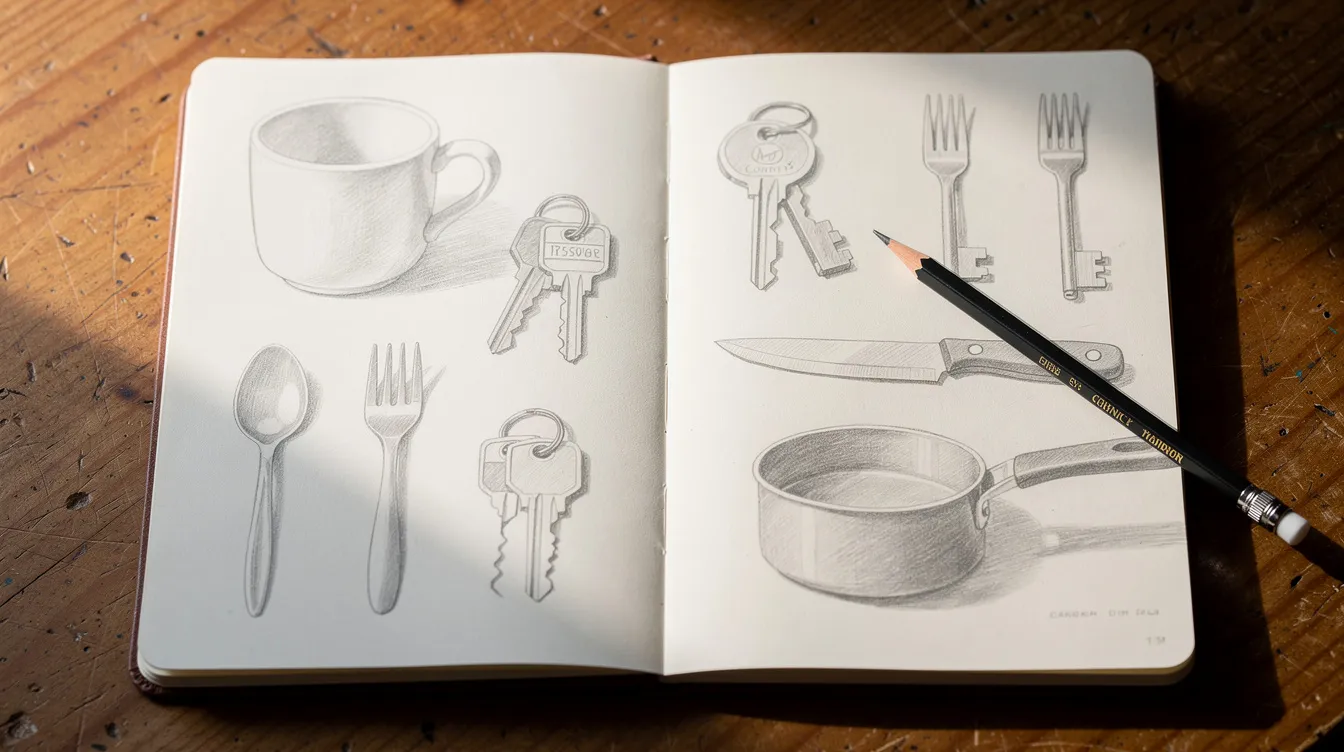
It is the least intimidating opening: no scene or model, just what is on your desk. Familiar objects like mugs, keys and a video game controller train line economy, proportion and shading. Still life painting has centuries of history behind it, proof that ordinary objects arranged on a table are great subjects and a respectable art form. Drawing everyday objects can improve sketching skills steadily, and revisiting subjects can lead to improved success in drawing over time.
Best For
Anyone returning after a break, people with only 5 to 10 minutes, and artists who want more confidence drawing from observation. Observational practice improves drawing from imagination, so this is also the foundation for the more inventive types below.
Key Strengths
It needs no planning. It teaches you to see ellipses, edges, and simple shapes in a wine bottle or a pencil cup. If you redraw the same object a month later, you can track your progress. It is also good for filling page edges with small vignettes. Practicing drawing from different angles develops new skills you would miss drawing the same view every time.
Possible Limitations
Everyday items can feel dull without a twist in composition or different lighting, and you can get stuck drawing the same objects forever. Add a constraint: draw it with your non dominant hand, or imagine it twice its size.
Example Sketchbook Drawing Ideas Using Basic Shapes for Everyday Object Studies
-
Today’s breakfast setup: mug, spoon, bowl, and whatever is behind them.
-
The contents of your bag or pockets drawn small and labeled, a portrait of an ordinary day.
-
Your shoes from above, then from the side on the next page.
-
The kitchen drawer: whisks, tape measures, and an old typewriter ribbon are better than they sound. Pay close attention to basic shapes and simple forms.
2. Timed Gesture Pages
Gesture drawing means short timed sketches capturing movement, energy and form rather than detail. It keeps pages lively and your lines loose.
Why This Idea Type Stands Out
Timers force you to let go of perfection and fill more pages in less time. Research defines gesture drawing as rapid, loose work that trains dynamic pose capture and line economy. These pages make a good warmup before longer sessions. Daily sketching like this builds consistency and enhances skills.
Best For
Artists who overwork every simple sketch, people who want better figures and movement, and anyone with only short bursts of time.
Key Strengths
It trains you to capture the essence of a pose, not tiny details. You can fill multiple pages in one sitting, building momentum. It adapts easily from 30 seconds to 5 minutes and works on pets, a bird at the feeder, and people on trains who are in constant motion. You can use videos of people moving as reference if drawing live feels too fast.
Possible Limitations
Pages can look messy, which may bother detail-oriented artists. And you might skip longer, more deliberate drawing altogether if gesture becomes your only mode.
Example Sketchbook Drawing Ideas for Timed Gesture Pages
-
Set a 10 minute timer and fill a page with 30 second stick-figure poses from life or a video.
-
Draw your own non-drawing hand holding different objects at 60 seconds each. You will not expect it to look good, and that helps. Try hand holding a pen, then a cup, then nothing.
-
People passing a cafe window: one mini pose per person, no erasing. Watch the scene and grab what you can.
3. Imaginative World-Building Prompts
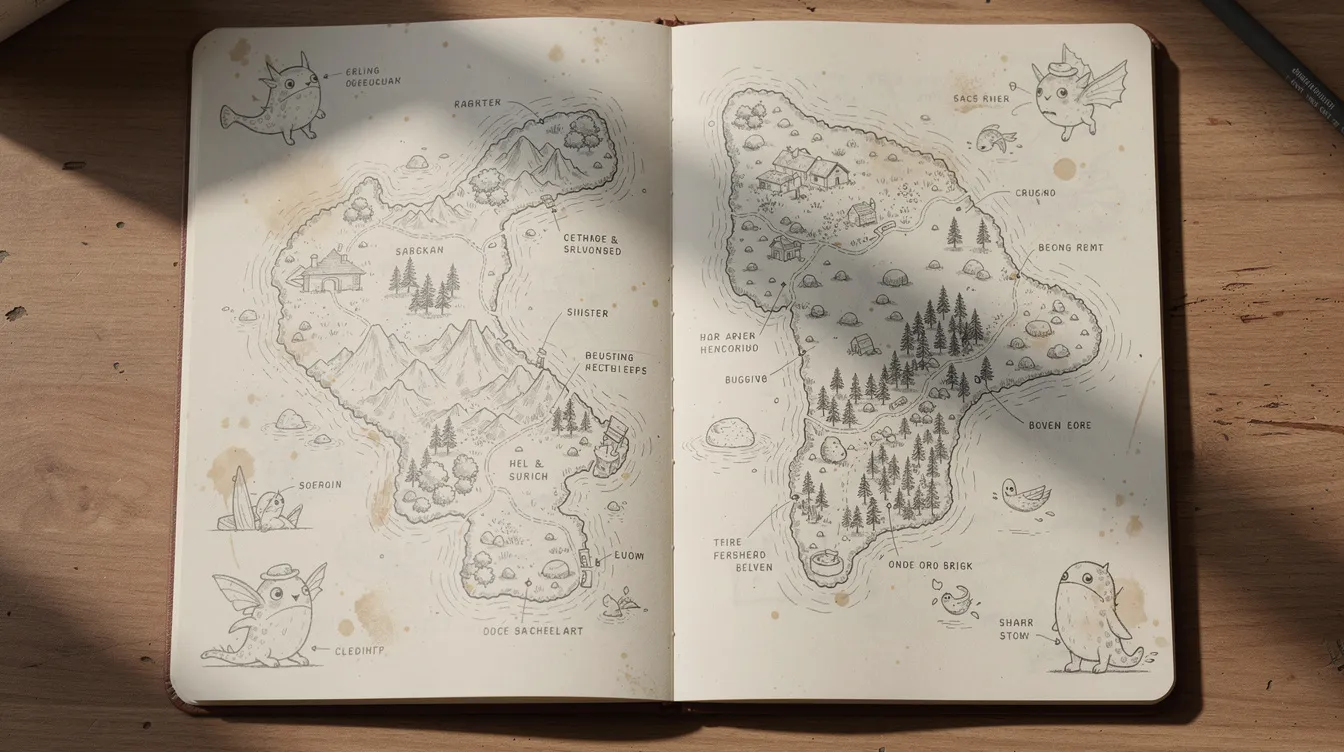
This type means building small fictional worlds, rooms, cities or creatures across several pages. Imaginary worlds can be created through sketching unusual themes, and conceptual themes can provide unique challenges to enhance drawing skills.
Why This Idea Type Stands Out
A recurring imaginary place gives you a reason to return to the book. It suits fans of fantasy, sci-fi and stories. Chain-linking prompts can inspire a visual progression in sketching, so each page feeds the next. Surrealism allows exploration of impossible and unexpected scenarios, and combining unrelated objects can lead to creative and surreal designs.
Best For
Artists bored with real objects, fans of novels, films and games, and people who like mixing drawing with notes, maps and lists. Sketching from imagination requires observational practice, so do not skip the object studies above entirely.
Key Strengths
Curiosity keeps you sketching. Repeated motifs build design skills. There is room to play with perspective and scale with no client pressure. Use your imagination to create your own set of rules for the world, and explore them page by page.
Possible Limitations
Spreads can overwhelm total beginners, and it is tempting to plan forever instead of putting lines down. A tiny first sketch beats a big plan. Imagine a single room before you imagine a continent.
Example Sketchbook Drawing Ideas for World-Building
-
A village built on tree branches: one page for houses, another for bridges.
-
A map of an imaginary island with close-ups of three places on the following pages.
-
A character’s bedroom and desk, including an open book and an exotic fish in a tank on the shelf.
-
A market on another planet where the stalls sell things that do not exist here. Create the scene from scratch.
4. Limited-Art Supplies Challenges
This type means small constraints: one pen, two colors, no lifting the pencil, drawing only with cross hatching. A prompt, in my method, is a subject, a limit and a twist.
Why This Idea Type Stands Out
Constraints reduce decision fatigue and suit travel sketchbooks and commutes. When you limit your tools, you solve visual problems in ways you would not have tried otherwise. Experimenting with different drawing styles can lead to artistic growth.
Best For
Artists overwhelmed by supplies, frequent travelers, and anyone in a rut drawing the same way every time. Using different techniques on purpose keeps the book alive.
Key Strengths
It builds confidence in line and value. It teaches creative problem-solving under clear rules. Spreads look consistent, which feels satisfying when flipping through. It turns easily into a week-long challenge. You can explore negative space to define subjects in drawing by focusing on surrounding areas instead of outlines.
Possible Limitations
Strict rules can feel boxing-in after a few pages, and limited palettes make complex landscapes harder. I have dropped rules that were too strict. If a constraint stops being fun, change it.
Example Sketchbook Drawing Ideas for Limited-Material Challenges
-
A spread in one fineliner with cross hatching for all shading.
-
Every object on your desk drawn in two colored pencils only.
-
A continuous-line mirror portrait of a person’s face without lifting the pen.
-
A weekend of silhouettes only: no interior lines, just shapes. Try an old car, ocean waves, and tree bark as subjects.
-
A cubist portrait using only basic shapes and straight lines. Mixed media is fine if you limit yourself to two types.
5. Narrative and Comic-Style Pages
This type turns moments of your day into tiny visual stories, from one panel to three-panel comics. Incorporating everyday objects into sketches can create compelling narratives, and using unique themes can make sketchbooks feel like artistic journals.
Why This Idea Type Stands Out
Every day produces material, which nearly removes “I have nothing to draw.” Stick figures are as valid as detailed characters. Emotional and symbolic representation can be explored through imagery when you turn a moment that mattered to you, even a funny one, into a small piece of art or one of your own artworks.
Best For
Journalers, would-be storytellers, and anyone wanting a visual record of a year or project. Interactive sketchbook ideas stimulate creativity, and comics are interactive by nature.
Key Strengths
Endless prompts because every day generates new scenes. Practice with expressions, staging, and body language. Brevity: you learn to communicate an idea with fewer lines. I write the date and one word on each page so the book reads like a record later. Looking at other artists’ work can inspire your own art, and comic artists are worth studying for layout alone.
Possible Limitations
Layouts can intimidate people used to single floating sketches, and some feel self-conscious drawing their own life. Start with one panel, not six.
Example Sketchbook Drawing Ideas for Narrative Pages
-
A three-panel comic of this morning with the clock time in each panel.
-
One small frustration from this week as an exaggerated, funny cartoon.
-
An overheard conversation drawn with simple stick-figure characters.
-
A memorable meal in tiny panels: ingredients, cooking, eating, dishes. Write one inspired caption per panel.
6. Seasonal and Location-Based Sketch Walks
This type means taking the book outside, choosing a route or place and filling pages with quick studies. Walking can spark new drawing ideas in ways that sitting at your desk cannot.
Why This Idea Type Stands Out
Real subjects are endless and moving helps. Pages become time capsules of where you lived or traveled. Incorporating sketching into daily routines, like a walk, prevents fatigue and keeps the practice fresh.
Best For
Artists stuck indoors, people who like walks, cafes and parks, and anyone practicing urban sketching before a trip.
Key Strengths
Complex scenes without inventing them. Quick decisions about what to simplify. Captures seasons and weather. Breaks the idea that you need a perfect studio. Nature provides great subjects: a bird on a branch, light through leaves, the way shadows fall at a specific moment in the afternoon.
Possible Limitations
Weather, safety and time of day can limit you, and drawing in public feels awkward at first. Start by drawing your own window view if going outside is not possible today.
Example Sketchbook Drawing Ideas for Sketch Walks
-
A 20 minute walk drawing only doorways that catch your eye.
-
Cafe mugs, chairs and shoes instead of full portraits.
-
A spread of tree trunks dated with the month and year, so you can revisit the spot in a different season.
-
A row of bags at a station, noting small details like stickers and tags. Use a photo if you cannot sketch fast enough in the moment.
7. Abstract Marks, Patterns and Experiments
This is a safe place for pure play with marks, texture and pattern. No finished picture required.
Why This Idea Type Stands Out
It works on tired or anxious days when even a shoe feels like too much. It is a good place to test new pens. Listening to instrumental music enhances creative inspiration, and abstract pages pair well with headphones and no plan.
Best For
Artists blocked or afraid of ruining the book, pattern lovers, and anyone wanting looser linework.
Key Strengths
No likeness to get right. Quick to start with a single line. It finds mark-making styles you can use later in figurative work.
Possible Limitations
Too many abstract pages can feel like avoiding the subjects you want to master. Rotate this type with the others.
Example Sketchbook Drawing Ideas for Mixed Media Abstract Experiments
-
A one minute line without lifting the pen, then shade the shapes it creates.
-
A page of one repeated shape in different sizes, overlapping.
-
My favorite: a grid of small boxes with one tiny drawing in each. A matchbox-size square is hard to be precious about, and nine of them fill a page and feel like progress. Put a cool pattern in one, a tiny picture of a friend in another, an image of a window in the third.
Quick Comparison of the 7 Sketchbook Idea Types
A fast way to choose by mood or goal:
|
Type |
Best For |
|---|---|
|
Everyday Object Studies |
Rebuilding confidence and observation at home |
|
Timed Gesture Pages |
Loosening up and capturing movement |
|
Imaginative World-Building |
Storytellers wanting ongoing projects |
|
Limited-Material Challenges |
Travel, minimal setups and breaking habits |
|
Narrative and Comic-Style Pages |
Documenting life and practicing storytelling |
|
Seasonal and Location-Based Sketch Walks |
Fresh inspiration and on-location drawing |
|
Abstract Marks, Patterns and Experiments |
Low-energy days and fear-free experiments |
How To Choose the Right Sketchbook Drawing Ideas for Today
The right idea depends on time, energy and current focus. This section should let you decide in under a minute.
My fallback for a stuck session: set a timer for ten minutes, pick the nearest object, do not negotiate about whether it is interesting, choose one limit (one pen, no erasing), draw until the timer ends even if you hate it by minute four. Then write the date and one word and close the book. That page counts.
Choose Based on How Much Time You Have
-
Under 10 minutes: everyday objects, gesture bursts, tiny pattern tiles.
-
15 to 30 minutes: mini-comics, limited-material pages, small sketch-walk studies.
-
30+ minutes: world-building scenes and outdoor spreads.
Label pages with time spent so quick pages count in your own eyes.
Choose Based on Your Energy and Headspace
-
Low energy: abstract marks or close-ups of one object.
-
Restless: gesture pages or a short walk.
-
Focused: world-building or location sketches.
Changing categories mid-page is allowed. There are no sketchbook police.
Choose Based on the Skills You Want to Build
-
Observation and accuracy: object studies and sketch walks.
-
Movement and gesture: timed gesture and narrative panels.
-
Composition and design: world-building and limited-material challenges.
-
Line quality and marks: pattern pages and single-pen challenges.
Pick one main skill per month and lean on 2 to 3 matching types. Drawing from observation improves imagination skills, so even if your goal is fantasy art, the object studies matter.
Which Sketchbook Idea Type Should You Start With?
There is no universal best, only a best starting point today.
-
Everyday Object Studies if you feel rusty.
-
Timed Gesture Pages if you want to stop overthinking.
-
Imaginative World-Building if you want a long-term project.
-
Limited-Material Challenges if supplies overwhelm you.
-
Narrative and Comic-Style Pages if you already keep a journal.
-
Seasonal and Location-Based Sketch Walks if you are stuck indoors and need fresh inspiration.
-
Abstract Marks, Patterns and Experiments if you are blocked or anxious but still want to touch the book today.
Pick one type now and fill a single page before you browse further.
Final Thoughts: Filling the Sketchbook One Idea at a Time
The goal is not the perfect idea. It is returning to the page with less pressure. Every page counts: rough gestures, unfinished walks, abstract scribbles. Filling a 100-page sketchbook shows improvement over time, even if the individual pages look rough. A new sketchbook is not a promise to be brilliant. It is a stack of chances to look at something closely.
Here is the honest part, what quietly stopped working for me. A saved list of 100 prompts: I used about six, so now I keep ten at most and replace them. “One drawing every day”: it collapsed after a missed day, so now I just fill the page I am on before starting a new book. Saving good paper for later: the sketchbooks I finish are cheap and a little ugly. Drawing to impress someone: pages drawn for no one got finished. Pages drawn for an audience got abandoned.
Rotate through the seven types over the next few weeks. Notice which keep you coming back. That is your practice. Creative drawing prompts are only useful if you use them, and using them means keeping them small. New to the blog? Start with the Start Here page.
Date the next blank page. Pick one prompt. Start within five minutes.
FAQ
What should I draw if I have no ideas at all? Draw the nearest object to your left hand. If that fails, the second nearest. No ideas usually means hunting for something interesting, so draw something available instead. A picture of your pen is better than a blank page.
How long should one sketchbook page take? Aim for five to fifteen minutes. A short limit prevents overworking and makes the next page easier. Some pages will run longer, and that is fine.
Should I plan the page before I draw? Only a little: choose the subject and one limit, then let the page happen. Heavy planning is another way to postpone the first line.
What if my drawings look bad? Most of mine do at least some of the time. Treat a bad page as information about what you looked at too quickly. Finishing the book matters more than any single page. The style you are building comes from volume, not from one perfect scene.
Do I need a special sketchbook or pen? No. Any book you are not afraid to ruin and any pen or pencil you own will do. I have finished more books with cheap supplies than good ones.